Histone Peptides for Epigenetic Studies
Jump to section
Eukaryotic nuclei contain a massive amount of genetic material. The DNA in a single human cell, if stretched out, would measure about 2 meters. To fit this length into a nucleus just a few micrometers wide, while keeping the DNA accessible for transcription, replication and repair, cells must compact it into dynamic structures capable of controlled folding and unfolding transitions.
Histone proteins play a key role in these mechanisms by facilitating the efficient packaging and unpacking of DNA. These processes are regulated by post-translational modifications (PTMs), which can modulate chromatin structure and consequently influence DNA accessibility.
For scientists wishing to study how individual or combination of PTMs can impact histone interactions, we offer an extensive collection of histone peptides with a wide range of modifications. These are available as purified individual histone peptides or histone peptide libraries provided in a variety of formats, including micro arrays, micro-titre plates and deep 96-well plates. To find out more, contact our experts at info@altabioscience.com.
What are Histone Proteins?
Histones are a family of proteins that are essential for the compacting of genetic material. Highly conserved across species, they act as molecular spools around which DNA strands coil. Each DNA-histone complex forms a nucleosome core particle (NCP), the basic unit of chromatin, which is further compacted to form chromosomes.
The ability of histones to form a complex with DNA is due to their highly basic nature and high abundance of positively charged residues (lysine and arginine). This allows them to associate with the negatively charged phosphate backbone of DNA to form a NCP. Each NCP consists of approximately 147 bp of DNA wrapped almost twice around a histone octamer, composed of two copies each of the core histones H2A, H2B, H3 and H4.
Nucleosomes are connected by short stretches of linker DNA, giving chromatin its characteristic “beads-on-a-string” appearance. The linker histones H1/H5 binds to this linker DNA, stabilising higher-order chromatin folding and promoting further compaction. H1 is comparatively large, at around 220 residues, while the core histones are smaller, each consisting of 100–150 residues with N-terminal tails protruding from the nucleosome surface.
Why Post-Translational Modifications of Histones Are Important
How Histone PTMs Influence Genome Regulation
Post-translational modifications (PTMs) are covalent alterations that occur at specific amino acid residues within proteins. These modifications are particularly prevalent in histone proteins, where the histone tails undergo various modifications at lysine, arginine, serine and threonine residues.
These modifications alter the local charge and structure of histones, which in turn changes how tightly DNA is bound to the nucleosome or creates docking sites for reader proteins that recruit transcriptional machinery. In this way, PTMs act as molecular switches by activating or silencing the gene. The location, identity and combination of modified residues (often referred to as the “histone code”) determine how accessible a gene is for expression, without any change to the underlying DNA sequence itself.
Types of Histone Modifications
Common histone modifications include methylation (mono-, di-, or trimethylation), acetylation, phosphorylation, citrullination and ubiquitination. With advances in mass spectrometry, additional modifications have been identified in recent years, such as histone lactylation, first described in 2019.
Most of these modifications are added covalently but remain dynamically reversible, regulated by dedicated “writer” and “eraser” enzymes such as:
- histone acetyltransferases (HATs) and deacetylases (HDACs);
- histone lysine methyltransferases (KMTs) and demethylases (KDMs);
- kinases and phosphatases to control phosphorylation;
- and ubiquitin ligases and deubiquitinases (DUBs) for ubiquitination.
Examples of Biological Processes Mediated by Histone Modifications
The effects of these modifications depend on the residue involved and the extent of its modification and their combination. For example, acetylation is generally associated with transcriptional activation, as it neutralises the positive charge on histone tails, loosening histone-DNA contacts and promoting a more open chromatin state.
Methylation can either activate or repress transcription depending on which residue is modified. For example, H3K4 methylation is typically associated with active transcription, while H3K9 and H3K27 methylation are associated with gene silencing. But histone modifications can affect many biological processes such as cell mitosis, DNA damage repair and cell differentiation.
Applications of Histones Peptides
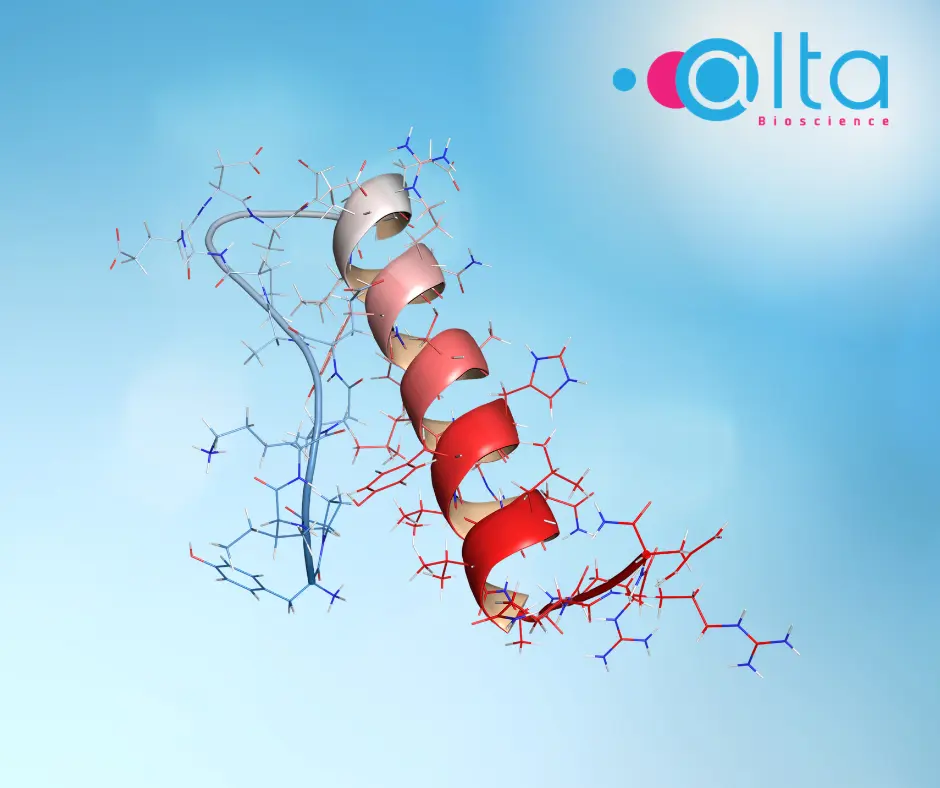
To better understand the roles of these modifications, it is possible to study these biological processes using peptides derived from histone proteins. They can be synthesised by solid phase peptide synthesis and produced with the desired post-translational modifications since modified amino acids are commercially available.
Histone peptides can be used in many ways, and for example our products have been used in the following applications:
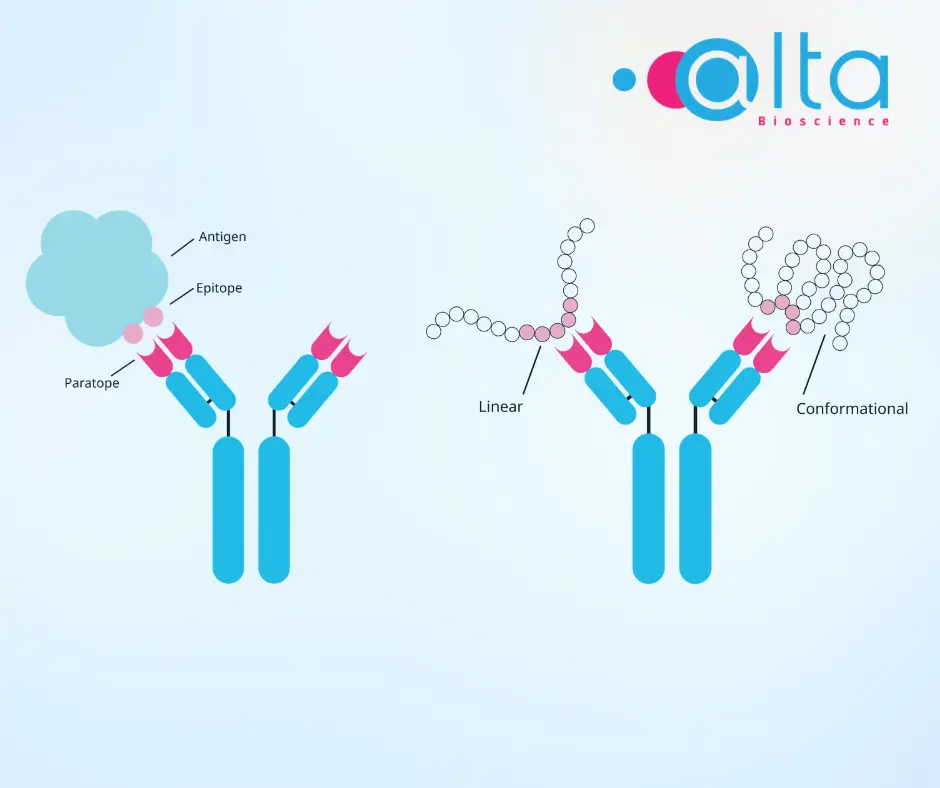
- As antigens for antibody generation: Histone peptides containing specific post-translational modifications can be used to stimulate an immune response and generate antibodies that specifically recognise the modified histone. For example, in a study investigating dynamic histone H3 methylation during gene induction, Edmunds et al. (2007) used our histone H3 peptides containing H3K9 acetylation (H3K9ac) and H3K4 trimethylation (H3K4me3), both with an additional C-terminal cysteine for coupling to keyhole limpet haemocyanin (KLH) to generate antibodies. The resulting antibodies were subsequently used in chromatin immunoprecipitation (ChIP) and Western blotting to detect these modifications and investigate their distribution and changes during gene activation. In particular, ChIP was used to examine the presence of H3K9ac and H3K4me3 across the c-fos and c-jun genes following gene induction.
- For the screening of histone antibodies: Large numbers of anti-histone antibodies are now commercially available and their specificity is often much broader than their datasheets suggest. By printing histone peptide libraries as micro arrays, it is possible to observe the extent of any cross reactivity to 94 different sequences into one operation.
- As substrates for enzyme activity assays: Synthetic histone peptides containing specific post-translational modifications can be used as substrates to investigate the activity and substrate specificity of enzymes that modify histones. For example, Bonnici et al. (2023) used peptides from our phosphorylation and arginine methylation histone peptide library (Set 5) to investigate the ability of JmjC lysine demethylases (KDMs) to catalyse arginine demethylation. The methylated histone peptides were incubated with different KDM enzymes and analysed by mass spectrometry, where a 14 Da decrease in peptide mass indicated the removal of a methyl group. This approach enabled the authors to compare the arginine demethylase activity of different KDMs and demonstrated that all four human KDM5 family members tested possess this activity in vitro.
- As ligands for protein–peptide binding assays: Histone peptides containing specific post-translational modifications can be used to investigate how proteins recognise and bind modified histones. For example, Philpott et al. (2011) used our histone peptide arrays, comprising 188 peptides from the Histone H3 and Histone H2A, H2B + H4 sets, to screen bromodomains for interactions with different histone modification patterns. The screen identified histone peptide binding partners for several bromodomains, including previously uncharacterised interactions involving BAZ2B and FALZ. Selected peptide–bromodomain interactions were subsequently developed into AlphaScreen displacement assays, which were used to investigate the binding of small-molecule inhibitors and chemical fragments.
- For biophysical characterisation of histone reader proteins: Modified histone peptides can also be used to quantify and characterise interactions with proteins that recognise specific histone marks. For example, Tallant et al. (2015) used our biotinylated histone peptide sets containing different combinations of histone tail modifications to investigate the binding preferences of the PHD finger and bromodomain of TIP5, as well as the related protein BAZ2B. Biolayer interferometry was used to measure peptide–protein interactions and identify histone modifications preferentially recognised by these reader domains. The study showed that the PHD fingers preferentially recognise unmodified H3K4, while the bromodomains recognise acetylated histone sequences, including H3K14ac and H4K16ac. Selected interactions were subsequently investigated using structural and other biophysical approaches to provide insight into how these proteins recognise specific histone modifications.
AltaBioscience’s Histone Peptides: Individual Peptides and Peptide Libraries
AltaBioscience has provided custom synthesis of histone peptides from human H2a, H2b, H3 and H4 regions for more than 20 years, having collaborated with the original scientist who developed the idea for histone assays.
Each set contains peptides with modifications such as methyl lysine, dimethyl lysine, acetyl lysine, phosphorylated amino acids and citrulline. In addition, we supply biotinylated histone peptides, including those in Histone Set 5 Sequences.
Sets and histone arrays held in stock and available to ship contain:
- Peptides from Histone H1, Histone H2A, Histone H2B, Histone H3 and Histone H4
- Post-translational modifications included in our sets and histone arrays providing hundreds of different combinations
- Biotinylated histone peptides with spacers incorporated providing more effective screening for epigenetic studies
These are available as individual purified peptides or as sets in the following formats:
- Unbound peptides in deep well trays
- Peptides immobilised on microtitre plates (ELISA format)
- Peptides immobilised on microarray slides
All individual histone peptides are supplied purified to >90%. Details of the histone peptides currently held in stock, including their sequences, can be found here. Our peptide stock includes H3K9acK14ac, H3K27me1, H4K5acK12ac biotin and many other modified histone peptides.
If you don’t see the sequence you require from our stock list, or if you would like to add a specific histone peptide to our stock, please contact us and we will synthesise it for you.
Our histone peptide microarrays are ideal for assay development, regulatory studies and assessing the quality of antibodies used in reporter systems. They are also powerful tools for epigenetic studies including:
- binding and pull-down studies
- protein-protein interactions
- enzyme affinity studies
- antibody screening assays
Each peptide can include post-translational modifications including acetylation, methylation, phosphorylation and citrullination.
For stock availability of individual peptides or sets or to discuss custom peptide synthesis requirements, please contact us at info@altabioscience.com or call +44(0)1527 584495 to speak to one of our peptide chemists.