Peptide Drug Discovery: Mechanisms, Applications and Experimental Advantages
Jump to section
Peptides have become indispensable tools in modern therapeutic research. Their unique ability to mimic functional regions of proteins, present defined interaction surfaces and explore structure–activity relationships (SAR) has made them central to drug discovery workflows across multiple therapeutic areas.
Peptide drug discovery encompasses both the development of peptide-based therapeutics and the broader use of synthetic peptides to interrogate biological targets, validate interactions, and refine early-stage candidates. From screening and epitope mapping to optimisation and computer-guided design, peptides provide researchers with a precise and adaptable way to accelerate early research.
As interest in complex biologics, new therapeutic modalities and personalised medicine continues to grow, so too does the need for reliable, well-characterised peptides that can support faster and more confident decision-making in the early pipeline.
In this article, we’ll explore how peptides are being leveraged across modern peptide drug discovery workflows: from screening and epitope mapping to early optimisation. We also highlight the quality factors that matter most, and how to work effectively with peptide partners to keep projects moving quickly and confidently.
Looking for reliable peptide synthesis to support your discovery workflow?
What makes peptides valuable as tools in drug discovery?
Peptides are highly effective discovery tools because they capture the key interaction motifs of proteins while remaining easy to customise, modify and scale. Their specificity makes them excellent probes for investigating molecular mechanisms, while their tunability supports fast, iterative experimentation across SAR, mechanistic studies and targeted screening.
Peptides also integrate well with high-throughput workflows, where coordinated batches and consistent formatting enable reliable data generation. As cost-efficient and experimentally flexible alternatives to recombinant proteins, they play a vital role across small-molecule, biologics and immunology research; all core components of today’s peptide drug discovery landscape.
How are peptides used in hit identification and screening?
Hit identification is one of the primary reasons drug discovery researchers turn to peptides. They offer a simple, reliable way to mimic key surface interactions without the complexity of working with full-length protein constructs.
Peptides support hit identification and screening in several key ways:
- Mimicking functional interaction surfaces
Peptides isolate the regions of a protein most relevant for binding. By focusing on these functional motifs, discovery teams can interrogate target interactions quickly, cost-effectively, and with greater experimental control. - Compatibility with high-throughput screening (HTS)
Peptides can be synthesised in coordinated batches, normalised to defined concentrations, and supplied in consistent formats such as lyophilised vials or plate-ready layouts. This standardisation reduces assay variability and enables confident comparison of screening data across experiments and sites. - Hit confirmation and de-risking
Once an interaction signal is detected, researchers typically resynthesise the candidate sequence, along with close variants, to confirm whether the result is genuine. Systematic substitutions reveal which residues drive binding, helping establish early SAR and guide downstream optimisation in peptide drug discovery programmes. - Hotspot mapping and prioritisation
By pinpointing critical binding regions, peptide hits help prioritise targets, inform small-molecule design strategies, and identify sequences that may warrant direct therapeutic development. - Phage display–derived hit discovery
Phage display enables the screening of vast peptide libraries presented on bacteriophage surfaces. Through iterative selection and amplification, high-affinity binders are enriched and subsequently re-synthesised for validation studies. This approach efficiently explores large sequence space and provides valuable starting points for follow-up optimisation [1, 2].
What role do peptides play in immune monitoring and epitope discovery?
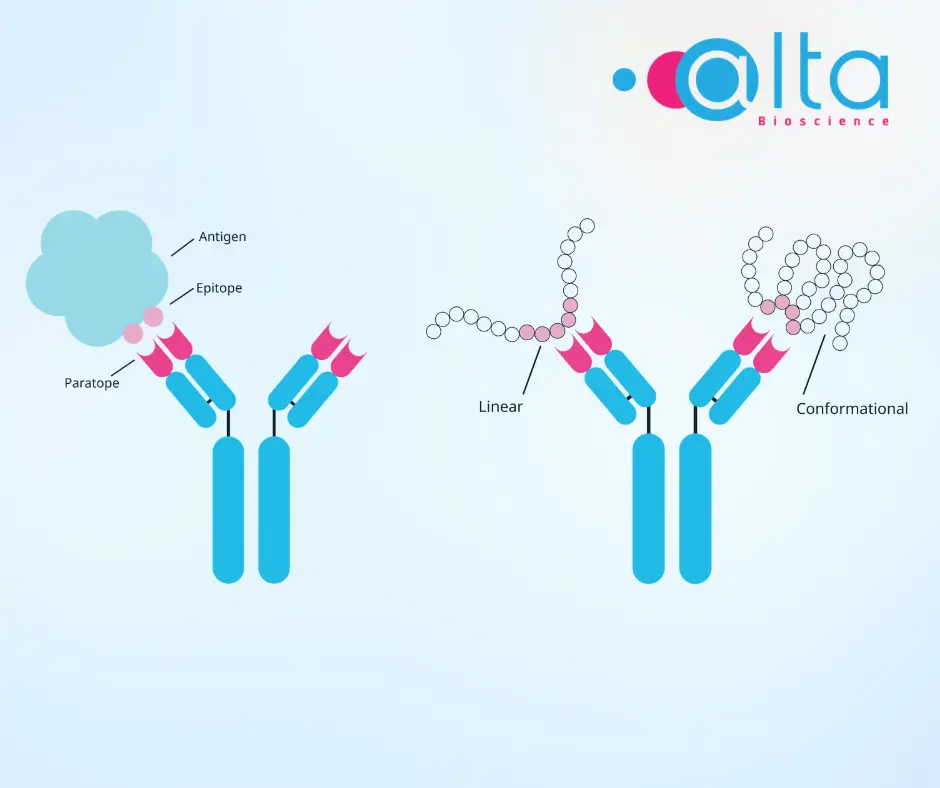
Immune-focused discovery programmes rely heavily on well-defined peptide reagents to interrogate responses with precision and control. One of the most widely used tools is the overlapping peptide library, where short peptides tile across a full protein sequence. This approach provides amino-acid-level resolution of potential epitopes, enabling teams to pinpoint the exact regions of an antigen that stimulate T-cell or B-cell responses.
Researchers are also increasingly turning to predicted epitope peptides to streamline early investigation. Computational modelling allows candidate T-cell or B-cell epitopes to be prioritised in silico, after which selected sequences can be synthesised for rapid screening before committing to larger experimental studies.
Defined peptide pools are also central to T-cell stimulation assays, where defined peptide pools are used to measure antigen-specific activation in PBMCs or engineered immune cells. These assays inform vaccine development, immuno-oncology programmes and early-stage cell therapy research by revealing the strength and nature of immune engagement[3]. In these contexts, peptide controls (known immunogenic sequences) are essential for calibrating assays, establishing baselines, and ensuring data quality across experiments.
Beyond native sequences, modified peptides, such as phosphorylated or citrullinated variants, help researchers investigate post-translationally altered epitopes found in autoimmune disease, chronic inflammation, or tumour neoantigen landscapes[4]. These tailored sequences can uncover immune targets that would otherwise be missed when only canonical amino acid sequences are tested.
Across these applications, peptides offer a level of precision and flexibility that is difficult to achieve with recombinant proteins or whole antigens. They enable high-resolution mapping of immune responses, support hypothesis-driven screening and provide controlled, reproducible tools for early immunological characterisation.
How are peptides used in hit-to-lead and lead optimisation?
Once an initial peptide hit has been identified, researchers often turn to synthetic peptides to explore how that sequence can be improved; a critical step in peptide drug discovery. Peptides are particularly well suited to early optimisation because they allow rapid, controlled variation of individual residues, structural motifs and chemical features. These systematic changes help uncover the sequence–activity relationships that guide the transition from a preliminary hit toward a more refined lead[5].
A major application is in SAR studies, where coordinated sets of peptide variants are synthesised to understand which positions contribute most to binding or functional activity. Alanine scans follow a similar logic: each residue is substituted with alanine in turn, enabling researchers to pinpoint essential contact points and identify regions tolerant to modification. Truncation studies complement these methods by progressively shortening the peptide to define the minimal active motif.
Chemical modifications play an equally important role. Modified peptide series, including phosphorylated, acetylated, cyclised, glycosylated, or non-natural amino acid variants, allow teams to explore how changes in charge, hydrophobicity, rigidity, or steric environment affect performance. These design choices can improve properties such as affinity, selectivity, solubility and proteolytic stability.
As optimisation progresses, peptides may be transformed into constrained analogues or peptide mimetics, which introduce structural rigidity or mimic key functional groups with more drug-like scaffolds. These designs help bridge the gap between early peptide hits and later-stage therapeutic leads by capturing the essential binding geometry in a format that may offer improved pharmacokinetic (PK) potential.
Increasingly, researchers are exploring cyclic peptides as part of lead optimisation. By constraining the backbone or introducing a ring structure, cyclic designs can enhance target affinity, improve proteolytic stability, and reduce conformational flexibility; properties that often translate into better assay performance.
Learn more about the emerging role of cyclic peptides in our article:
Together, these approaches make peptides highly effective tools for hit-to-lead and early optimisation; enabling fast, hypothesis-driven iteration, and paving the way for more advanced medicinal chemistry or biologics engineering.
How are peptides used in AI-driven drug discovery workflows?
AI and machine-learning approaches are increasingly used to guide peptide drug discovery. However, these computational methods depend heavily on high-quality experimental data, which is where synthetic peptides play a central role. Well-designed peptide batches provide the controlled inputs needed to test model predictions and generate consistent datasets for iterative improvement.
In practice, AI-enabled workflows begin with a set of sequences proposed by a model. These candidates are then synthesised as physical peptides and evaluated in binding assays, cell-based systems, or other analytical platforms. The resulting data, whether positive or negative, is fed back into the algorithm to refine future predictions. This “design–test–learn” loop only works effectively when the synthetic peptides are accurate to design, reproducible and supplied in standardised formats[6].
Consistent peptide synthesis supports AI-driven workflows by ensuring that experimental inputs remain standardised across iterative testing cycles. When researchers evaluate coordinated peptide sets, sometimes dozens of sequences at a time, reliable formatting and reproducibility help maintain clear benchmarking conditions for model refinement [7].
Chemical diversity is equally important. Modified peptides, such as phosphorylated, acetylated, cyclised, or other chemically-altered variants, help broaden the data available to computational models, enabling them to capture a wider range of biochemical features. These expanded datasets improve model robustness and make predictive tools more applicable to real-world optimisation tasks.
Ultimately, AI-driven approaches depend on a stable, reliable supply of high-quality synthetic peptides to reach better candidates faster.
Without reproducible experimental data, the design–test–learn loop cannot operate effectively, limiting the value of computational predictions. Peptides therefore act as both the starting point and the validation step for AI-enabled discovery.
Why does peptide quality matter so much in drug discovery workflows?
High-quality peptides are essential for generating reliable, interpretable data in early discovery. Even small deviations in purity, sequence integrity, or formulation can alter assay behaviour, obscure subtle activity differences, or create noise that complicates hit interpretation.
Here are the key peptide qualities to look out for:
- Purity and sequence identity
Impurities can introduce off-target effects or interfere with assay readouts, while minor sequence errors may misrepresent SAR trends. Confirmed identity and defined purity thresholds are critical for confident interpretation. - Solubility and formulation consistency
Variations in counterions, solvents, or dissolution behaviour can alter effective concentrations and affect binding outcomes. Standardised preparation reduces variability across experiments. - Batch-to-batch reproducibility
Peptide drug discovery is inherently iterative. When coordinated sets are tested across multiple cycles, inconsistent synthesis can obscure real activity trends, distort AI-guided optimisation workflows and delay progression. - Assay-ready formatting and documentation
Lyophilised aliquots, plate-ready layouts and clear QC data (e.g., MS and HPLC) support reproducibility, traceability, and smoother transitions into later development phases.
Peptide quality is a fundamental requirement for confident screening, hit validation and early optimisation. Reliable synthetic inputs support clearer decision-making and help accelerate the front end of drug development.
Want to understand peptide synthesis and analysis in more technical depth?
Our comprehensive peptide synthesis technical document explains synthesis options, analytical methods, purification strategies, and key considerations for robust peptide generation.
What should you look for in a peptide partner for drug discovery projects?
Given the important role of high-quality peptides in early discovery, choosing the right synthesis partner can have a substantial impact on your project timelines and data quality. Here are the key things to look for when assessing whether a partner can reliably support peptide drug discovery workloads:
- Strong quality systems and analytical capability
ISO 9001-certified quality management systems, robust QC checks, and clear documentation (MS, HPLC, purity profiles) to confirm every sequence is delivered as intended. - Capacity and scalability for coordinated batches
The ability to supply related peptide sets in consistent formats and concentrations, and to reproduce them reliably across multiple cycles. Rapid delivery of standard peptides in ~7–10 working days to help maintain momentum through screening and optimisation. - Comprehensive modification support
Access to phosphorylation, acetylation, cyclisation, glycosylation, non-natural residues, and other chemistries needed for SAR and optimisation studies. - Experience with discovery-driven workflows
Including phage-display hit resynthesis, immune-monitoring peptide pools, screening campaigns, and AI-guided design testing – ensuring practical understanding of real assay requirements.
At AltaBioscience, we understand the pressures of early discovery and tailor our synthesis, documentation and support to help you generate clear, dependable data from day one.
Advancing what’s possible in peptide drug discovery
Peptides remain one of the most versatile tools in early discovery, helping researchers interrogate targets, validate early signals, and progress promising candidates with confidence. Whether used in screening, immune profiling, optimisation cycles, or computational workflows, high-quality peptide inputs underpin reliable data and effective decision-making in peptide drug discovery.
At AltaBioscience, we stay closely connected to the needs of discovery teams, ensuring our synthesis, QC, and delivery formats integrate smoothly into real-world research workflows. We focus on providing clarity, consistency, and flexibility – so your projects can move forward without interruption.
If you’re exploring new screening approaches or planning a peptide-based discovery programme, our expert team can help you choose the formats and modifications that best support your project.
Contact us today to talk to a specialist
References
- Jakob V, Zoller BGE, Rinkes J, et al (2022) Phage display-based discovery of cyclic peptides against the broad spectrum bacterial anti-virulence target CsrA. Eur J Med Chem 231:114148. https://doi.org/10.1016/j.ejmech.2022.114148
- Kaew-amdee S, Makornwattana M, Charlermroj R (2025) Identification of novel human IgE-binding peptides from a phage display library for total IgE detection. Scientific Reports 2025 15:1 15:27986-. https://doi.org/10.1038/s41598-025-12574-7
- Castro A, Holenya P, Eckey M, et al (2020) Peptide pools for target antigen identification, immune monitoring, and cellular therapy. Cytotherapy 22:S119–S120. https://doi.org/10.1016/j.jcyt.2020.03.222
- Zhong Q, Xiao X, Qiu Y, et al (2023) Protein posttranslational modifications in health and diseases: Functions, regulatory mechanisms, and therapeutic implications. MedComm (Beijing) 4:e261. https://doi.org/10.1002/mco2.261
- Vrbnjak K, Sewduth RN (2024) Recent Advances in Peptide Drug Discovery: Novel Strategies and Targeted Protein Degradation. Pharmaceutics 16:1486. https://doi.org/10.3390/pharmaceutics16111486
- Hashemi S, Vosough P, Taghizadeh S, Savardashtaki A (2024) Therapeutic peptide development revolutionized: Harnessing the power of artificial intelligence for drug discovery. Heliyon 10:e40265. https://doi.org/10.1016/j.heliyon.2024.e40265
- Liu X, Guan F, Luo H, et al (2026) Artificial intelligence-driven discovery of bioactive peptides: Computational approaches and future perspectives. aBIOTECH 7:100014. https://doi.org/10.1016/j.abiote.2025.100014